A clean car can look great for an afternoon. The real difference shows up after a rainy commute, a week of parking under trees, or a drive on roads coated with winter salt. When comparing car wax vs ceramic protection, most drivers want a simple answer: which option will keep their vehicle looking better with less effort?
The answer depends on how often you wash, where you drive, how long you want protection to last, and the kind of finish you prefer. Wax and ceramic protection both improve shine and help water move off the surface, but they do not perform the same way or deliver the same staying power.
Car Wax vs Ceramic Protection: The Main Difference
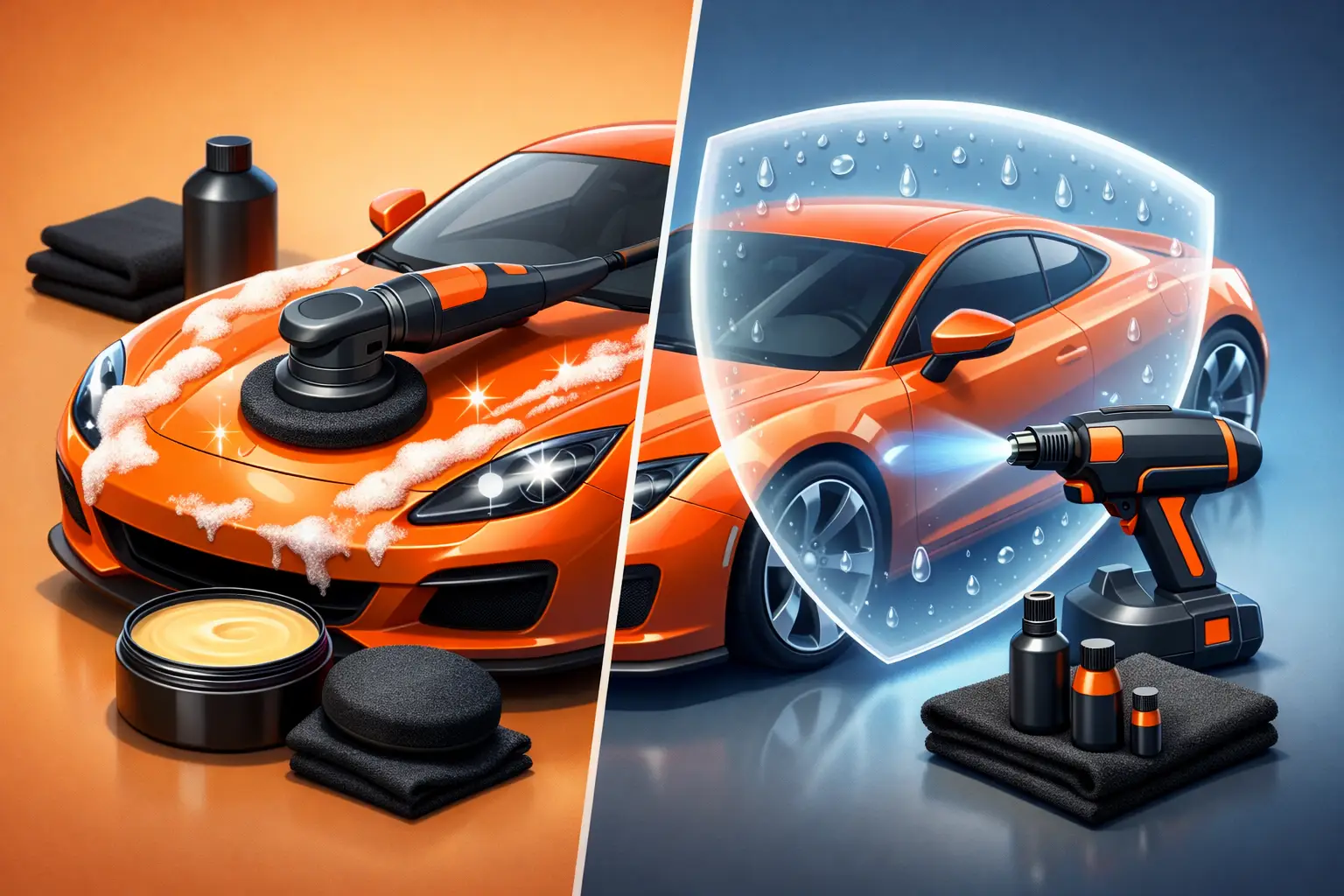
Car wax is a traditional paint protectant that leaves a warm, glossy finish on your vehicle. It creates a sacrificial layer over the clear coat, helping reduce the effects of sun exposure, dirt, light road film, and environmental buildup. Wax has earned its reputation because it makes paint look richer quickly, especially on darker colors.
Ceramic protection uses advanced protective polymers, often containing silicon dioxide or similar ingredients, to create a more durable, water-repelling surface. At a car wash, ceramic protection is generally applied as part of a premium wash process. It is not the same as a professionally installed, multi-year ceramic coating, but it can still provide noticeable gloss, stronger water beading, and longer-lasting protection than a standard wax application.
Think of wax as a dependable short-term refresh for shine and surface protection. Ceramic protection is the better choice when you want enhanced water behavior, a slicker finish, and more help between washes.
What Wax Does Well
Wax is still a smart option for drivers who want a polished appearance without paying for the highest protection level every visit. A quality wax treatment can bring out color, add depth to the paint, and help your vehicle shed light dirt and water more easily.
It is especially useful before a special event, after a stretch of rough weather, or whenever your car looks dull despite being clean. Wax also works well for drivers who wash consistently and do not mind refreshing protection more often. If your vehicle is garaged, driven lightly, or washed every few weeks, wax may provide the value and appearance you are looking for.
The trade-off is durability. Wax gradually wears away through rain, UV exposure, detergents, road grime, and regular washing. It cannot stop rock chips, prevent scratches, or correct faded or damaged paint. It is protection, not paint repair.
Where Ceramic Protection Pulls Ahead
Ceramic protection is built for drivers who want their wash results to hold up longer. Its biggest visual advantage is water behavior. Water tends to bead up and roll away more readily, taking loose dirt with it. This can make a vehicle easier to maintain between washes and reduce the heavy, grimy look that develops after wet roads or dusty parking lots.
For Frederick-area drivers, that extra protection can be especially helpful. Spring pollen, summer storms, tree sap, fall leaves, and winter road treatment all find their way onto your paint. Ceramic protection gives your exterior a more resilient barrier against the everyday contaminants that make a clean vehicle look neglected fast.
It also delivers a bright, slick finish that many drivers notice immediately. On newer vehicles, ceramic protection can help preserve that just-washed appearance. On daily drivers, it makes routine maintenance feel more manageable because dirt and water do not cling as stubbornly to the surface.
Ceramic protection is not permanent, though. The protection applied during a wash is designed to be renewed as part of regular vehicle care. Its performance depends on the wash package, driving conditions, weather exposure, and how frequently the car is cleaned. A car that sits outside all week and travels I-270 every day will need more frequent care than one that stays in a garage and sees occasional local errands.
Which Option Fits Your Driving Routine?
Choose wax when your priority is a classic glossy finish, a lower-cost step up from a basic wash, or a periodic appearance boost. It is a practical choice for a well-maintained vehicle that receives regular washes and does not face heavy exposure to road grime.
Choose ceramic protection when you want a stronger premium finish that helps water bead, supports easier cleaning, and stands up better to frequent driving. It is often the better fit for commuters, families with busy schedules, rideshare drivers, and anyone who parks outdoors or washes often enough to appreciate ongoing protection.
There is also a budget question. Ceramic protection usually costs more than wax because the chemistry and protection level are more advanced. But the best value is not always the lowest price on a single visit. If ceramic protection helps your vehicle stay cleaner-looking between washes and encourages you to maintain it regularly, the added cost can make sense.
For frequent washers, an unlimited monthly plan with premium protection can be an easy way to keep maintenance predictable. Rather than waiting until the paint looks dull or the wheels are heavily coated in brake dust, you can wash after a storm, before a weekend trip, or whenever your schedule allows.
Protection Works Best on a Clean Surface
Neither wax nor ceramic protection can perform at its best over a layer of dirt, salt, or oily road film. The wash process matters. A thorough exterior clean removes the contaminants that block shine and prevent protectants from making proper contact with the paint.
That is why premium wash services often combine cleaning steps with protective treatments such as wheel care, tire shine, underbody washing, and water-repellent applications. Each service addresses a different part of the vehicle, from the paint and glass to the places where road grime collects out of sight.
For vehicles exposed to winter conditions, do not overlook the underbody. Wax and ceramic protection focus on painted exterior surfaces, while salt and slush can build up underneath. Regular underbody cleaning is a separate but worthwhile part of keeping your vehicle looking good and helping protect it through Maryland winters.
What Neither Treatment Can Do
A clear understanding prevents disappointment. Wax and ceramic protection can enhance gloss, add a protective layer, and improve water beading. They cannot remove deep scratches, repair peeling clear coat, erase swirl marks, or protect against every hazard on the road.
Bird droppings, tree sap, bug residue, and spilled fuel should still be cleaned off promptly. Even a protected surface should not be left covered in contaminants for days. Protection gives you more time and easier cleanup, but it does not make paint invincible.
If your car already has dull, oxidized, or heavily scratched paint, it may need paint correction or professional detailing before protection can look its best. Applying a protectant over damage may improve gloss temporarily, but it will not make the underlying issue disappear.
A Simple Way to Choose at Your Next Wash
Start with your real routine rather than the label on the package. If you drive occasionally, keep your car covered, and mainly want a fresh shine, wax can be a great fit. If your car is part of daily family life, commuting, school drop-offs, errands, and weekend travel, ceramic protection offers more support against the mess that comes with using your vehicle.
At Fusion Carwash, the goal is to make that decision easy. Choose the level of clean and protection that fits your day, then let the wash process handle the work while you get time back.
The best protection is the one you will maintain. Whether you choose wax for a polished refresh or ceramic protection for longer-lasting water beading and shine, regular care keeps every drive looking a little more put together.