Road salt in winter, pollen in spring, and everyday commuter grime can change a clean vehicle fast in Frederick. When comparing touchless versus tunnel wash, the better choice comes down to what is on your vehicle, how much time you have, and the level of clean you expect when you pull away.
Both options can be a smart alternative to washing at home. They use professional wash chemistry, controlled water pressure, and processes designed to clean more efficiently than a driveway hose and sponge. Still, they work differently. Understanding those differences makes it easier to choose a wash that fits your vehicle and your routine.
Touchless Versus Tunnel Wash: The Real Difference
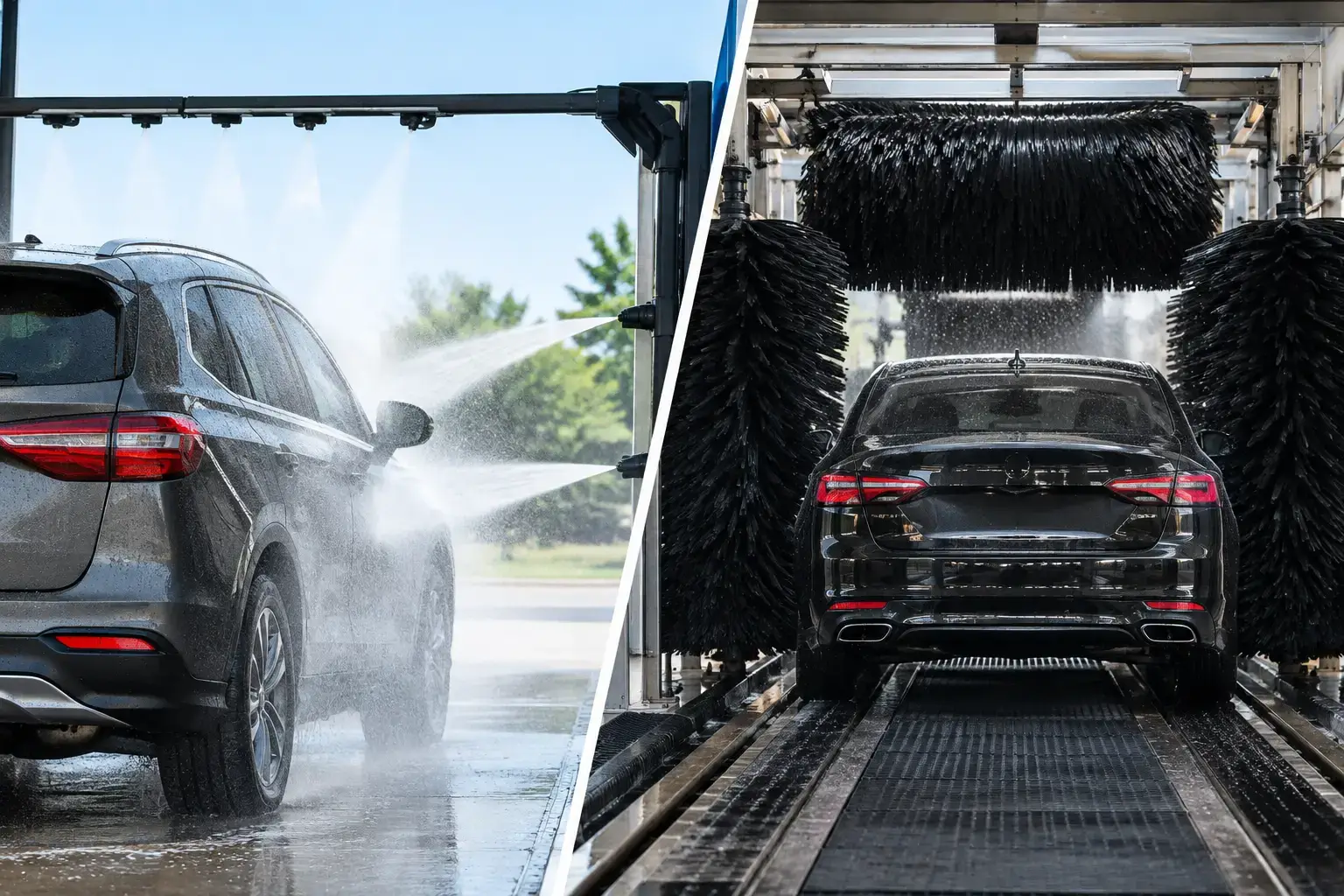
A touchless wash relies on high-pressure water and specialized detergents to loosen and rinse away dirt. Nothing physically brushes against the paint during the wash process. The vehicle remains still or moves through a bay while the equipment applies soap, rinses, and drying air.
A tunnel wash moves your vehicle along a conveyor through a series of cleaning steps. Modern tunnel systems typically combine presoak solutions, soft foam or cloth materials, wheel-cleaning equipment, rinses, protectants, and powerful dryers. The key difference is contact. The materials in a tunnel physically agitate the vehicle’s surface to help remove stuck-on grime.
That difference matters because water and soap alone are excellent at handling loose dirt, dust, and fresh road film. They can struggle with the grime that builds up behind wheels, along lower panels, and on the back of an SUV after several wet commutes. Gentle friction often produces a more complete clean in those areas.
When a Touchless Wash Makes Sense
Touchless washing is a practical choice when your vehicle is lightly soiled and you want a no-contact cleaning process. Many drivers prefer it after a dusty day, a light rain, or a short stretch between more thorough washes. It is also appealing to owners who are especially cautious about any material touching their paint.
Because touchless systems use chemistry and pressure to do the work, the quality of the soap and the condition of the vehicle make a real difference. A fresh layer of pollen may rinse away nicely. Dried mud, oily road film, insect residue, or salt buildup may not. You may leave with a vehicle that looks improved but still has a faint film on the lower doors or rear hatch.
Touchless washing can also require stronger detergents or longer chemical dwell times to compensate for the lack of friction. A reputable wash process uses products correctly and rinses thoroughly, but it is worth remembering that “touchless” does not automatically mean a deeper clean or better protection. It simply describes how the wash removes dirt.
For drivers who wash often and do not let grime build up, touchless can be a convenient maintenance option. The best results usually come when the vehicle is cleaned before dirt has a chance to bond tightly to the surface.
Why Tunnel Washes Often Clean More Thoroughly
A quality tunnel wash is built for the reality of Maryland driving. Vehicles collect grit from construction zones, residue from wet roads, salt in colder months, and fingerprints, crumbs, and mud from busy family schedules. Presoak starts breaking down that mess, while soft wash materials provide the gentle movement needed to lift away more of it.
This is why tunnel washes are often the stronger choice for routine exterior cleaning. The process can reach the broad painted surfaces, glass, wheels, tires, and lower body panels more consistently than water pressure alone. When paired with quality drying equipment, the finished vehicle also tends to have fewer lingering water spots.
The word “tunnel” can concern drivers who have heard stories about scratches. That concern is understandable, but the equipment is only part of the picture. Well-maintained soft materials, clean wash chemistry, proper vehicle guidance, and a professional process all matter. A properly operated modern tunnel is designed to clean efficiently while treating vehicle surfaces with care.
No wash method can erase existing paint defects, and no operator should promise that a vehicle with loose trim, damaged accessories, or prior paint issues has zero risk. If your vehicle has aftermarket parts, a roof rack, a cracked windshield, or a concern about a specific accessory, ask before entering the wash. Good service starts with clear expectations.
Paint Care Depends on More Than Contact
It is easy to frame the decision as touchless equals safe and tunnel equals risky. The reality is more balanced. Paint care depends on the condition of the vehicle, the equipment, the wash products, and how frequently contaminants are allowed to sit on the finish.
Road salt and embedded grime can be hard on a vehicle’s appearance when they remain in place for weeks. Regular washing helps remove those contaminants before they become a bigger problem, especially during winter and early spring. For many daily drivers, a consistent tunnel wash with protective options is a sensible approach to keeping paint, wheels, and exterior surfaces looking cared for.
Protection also matters after the cleaning step. Wax, sealants, ceramic protection, and water-repellent treatments can help water bead and make future grime easier to remove. They are not a substitute for careful driving or paint correction, but they can help maintain a polished appearance between washes.
If your car has a fresh professional coating, specialty matte paint, delicate decals, or a recently completed paint repair, follow the recommendations from the installer or body shop. Those situations may call for a more specific approach than a standard wash routine.
Consider Your Schedule, Not Just Your Vehicle
The right wash should fit real life. A touchless wash may suit a driver looking for a quick refresh with no physical contact. A tunnel wash is often better for commuters, families, and frequent drivers who want a dependable clean without spending their weekend doing the work themselves.
Think about how your vehicle is used. If it spends most days in a garage and only picks up light dust, touchless may be enough between deeper cleanings. If it handles school drop-offs, highway mileage, work parking lots, sports gear, or regular trips on wet roads, a tunnel wash can offer better visible results.
Frequency changes the value equation, too. Washing after every storm or during heavy pollen season can add up when paying one visit at a time. An unlimited monthly wash plan can make sense for drivers who want to keep their vehicle clean without debating whether the next wash is worth the cost. It is especially useful when conditions change quickly and one wash does not stay clean for long.
Choose Based on the Dirt You Can See
A simple rule helps: light, loose dust favors touchless; stuck-on road film favors a tunnel. Look at the lower doors, wheel faces, rear bumper, and windshield. If those areas are visibly coated, a process with gentle friction will usually give you the cleaner finish you are after.
Also consider what “clean” means to you. Some drivers are satisfied when the dust is gone. Others want bright wheels, a dry finish, glossy paint, and protection that makes the vehicle easier to maintain through the next week. Neither preference is wrong, but each points toward a different wash experience and package level.
For a vehicle that needs both exterior cleaning and attention inside, full-service options can save even more time. Relax while trained staff handle the details, rather than trying to fit vacuuming, interior wipe-downs, and exterior care into an already busy day.
A Better Wash Routine for Frederick Drivers
The best choice is rarely one method forever. A touchless wash can be useful for a light maintenance clean, while a tunnel wash is often the go-to after bad weather, long highway drives, or weeks of buildup. What matters most is choosing a professional wash that uses quality products, keeps equipment maintained, and gives you options that match your vehicle’s needs.
At Fusion Carwash, that means making car care feel simple: choose the level of cleaning and protection you want, then get back to your day with a vehicle that looks ready for it. A clean car is not just about shine. It is one less detail waiting for your weekend.