A clean interior changes how a vehicle feels before you even turn the key. The floor mats look better, the seats feel more inviting, and the clutter from school drop-offs, commutes, snacks, and weekend errands stops taking over. When considering interior vacuum versus steam cleaning, the right choice comes down to what is actually in your vehicle – loose debris, embedded dirt, stains, odors, or a little of everything.
Vacuuming and steam cleaning serve different purposes. One is an efficient way to remove dry debris and refresh the cabin. The other provides a deeper level of care for grime that has settled into upholstery, carpets, crevices, and high-touch surfaces. Knowing the difference helps you spend your time and money where it will make the most visible difference.
Interior Vacuum Versus Steam Cleaning: The Core Difference
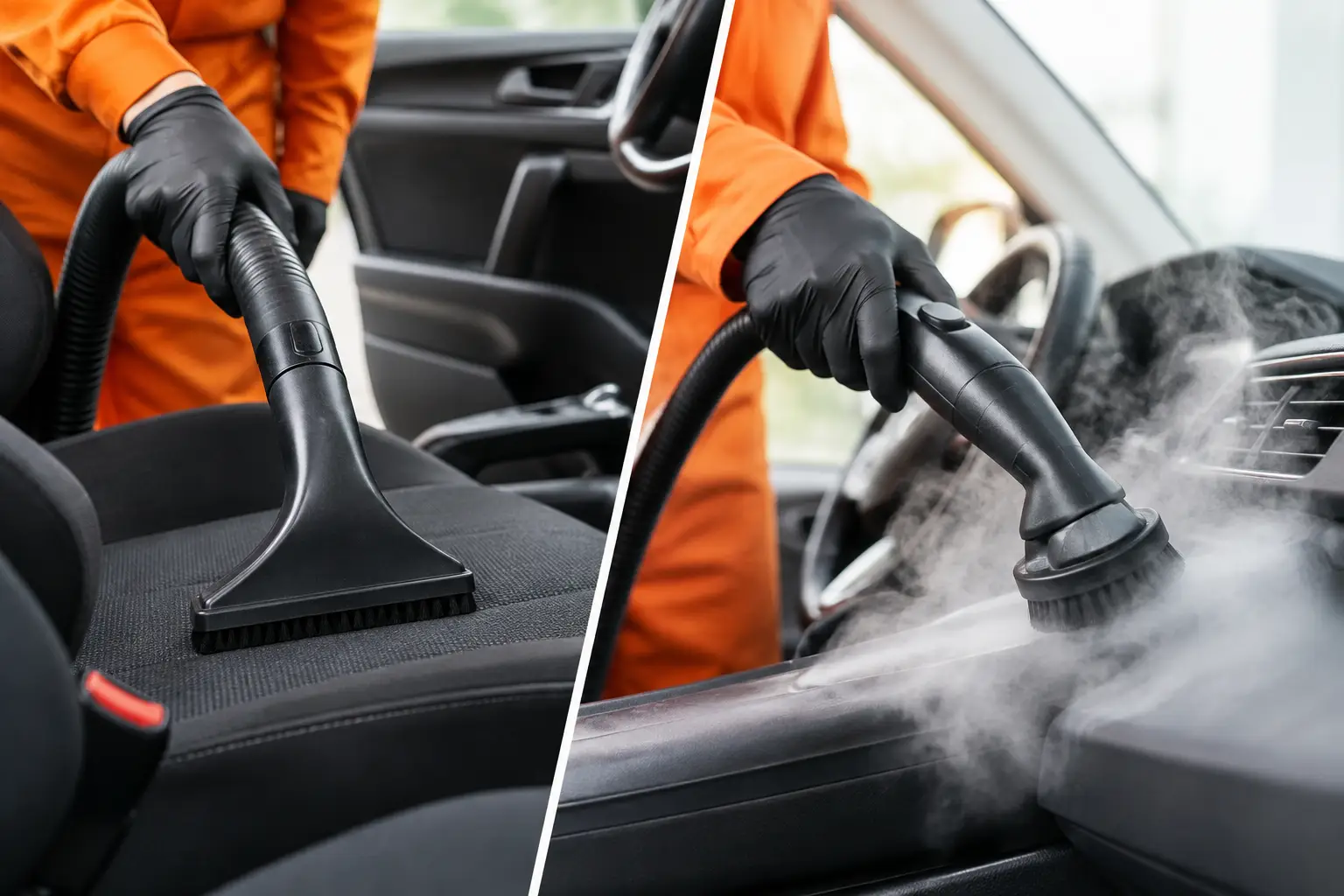
An interior vacuum focuses on removal. It pulls out loose dirt, sand, crumbs, pet hair, leaves, and other dry debris from carpets, floor mats, seats, and cargo areas. For many drivers, this is the regular maintenance step that keeps a vehicle from looking neglected between more detailed services.
Steam cleaning focuses on release and sanitation. Controlled steam uses heat and moisture to loosen grime that a vacuum cannot reach or lift on its own. It is especially useful around cup holders, door panels, seat seams, console buttons, vents, and other places where oils, spills, and everyday buildup tend to collect.
Neither service replaces the other in every situation. A vacuum is usually the first move because it clears away dry material before deeper cleaning begins. Steam is most valuable when dirt is stuck on, a spill has left residue, or interior surfaces need more than a quick reset.
When an Interior Vacuum Is the Better Choice
A vacuum is the practical answer when your car is generally clean but needs attention after normal use. Think of the gravel tracked in after a soccer game, snack crumbs under the back seat, pollen and leaves around the floor mats, or pet hair in the cargo area.
For busy commuters and families, regular vacuuming prevents small messes from becoming a bigger detailing project. Dirt grinds into carpet fibers over time. The longer it stays there, the harder it can be to remove and the more worn the interior may look.
An interior vacuum is usually a good fit when:
- The mess is dry, loose, and mostly on floors or seats.
- You need a quick refresh before passengers, a work trip, or a weekend outing.
- You maintain your vehicle often and want to stay ahead of buildup.
- You are using an express wash visit to handle the outside and the cabin in one stop.
For vehicles that see daily use, a consistent vacuum routine can go a long way. Express locations with free vacuum access make this especially convenient. You can handle the visible debris on your schedule without turning a simple cleanup into an all-day task.
What a Vacuum Cannot Fully Handle
Vacuuming has limits. It will not remove dried coffee from a console edge, body oils from a steering wheel, sticky residue in cup holders, or salt marks that have bonded to carpet fibers. It may improve the look of a stain by removing surface dirt, but it cannot break down the material causing the stain.
A vacuum also cannot truly address odor sources. If an odor comes from old spills, damp carpet, food residue, or grime in tight spaces, removing loose debris may help, but deeper cleaning is often needed to deal with what is left behind.
When Steam Cleaning Makes More Sense
Steam cleaning earns its place when the interior needs a more detailed reset. It is ideal for vehicles that have been through a messy season, carried kids or pets regularly, or simply gone too long without focused interior care.
Maryland weather can make this need obvious. Wet shoes, winter road salt, spring pollen, humid summer days, and mud from outdoor activities all find their way into a vehicle. A standard vacuum keeps debris under control, but steam can help lift the grime that settles into surfaces afterward.
Steam is particularly helpful for hard surfaces and tight areas that are difficult to clean by hand. Door jambs, cup holders, center consoles, dashboard details, steering wheels, and seat tracks can collect dirt that makes an otherwise clean vehicle feel tired. Steam loosens that buildup so it can be carefully wiped away.
For fabric seats and carpets, steam may help refresh fibers and release surface-level grime. However, the best method still depends on the material and the condition of the stain. Deep stains, heavy pet accidents, mildew, or persistent odors may require a more specialized interior detailing approach beyond steam alone.
Steam Cleaning Is Not a Shortcut for Every Problem
Steam is powerful, but it should be used with care. Too much moisture or heat in the wrong area can be a concern for delicate materials, electronics, damaged upholstery, or surfaces with loose trim. Professional service matters because the process should be adjusted to the vehicle, not applied the same way everywhere.
It also helps to set realistic expectations. Steam can significantly improve a dirty interior, but it cannot always erase a stain that has permanently changed fabric color or remove years of wear. The goal is a cleaner, fresher cabin with noticeably improved surfaces, not a promise that every older mark will disappear.
How Often Should You Choose Each Service?
For most vehicles, vacuuming should happen far more often than steam cleaning. If you have children, pets, a long commute, or regularly carry equipment, a quick weekly or biweekly vacuum can keep the interior manageable. For lighter-use vehicles, once or twice a month may be enough.
Steam cleaning is better treated as periodic deeper care. Every few months works well for many drivers, especially after winter, before selling or trading a vehicle, following a road trip, or whenever the cabin starts to feel sticky, dusty, or stale despite regular vacuuming.
The right schedule depends on how you use your car. A family SUV used for carpools, sports gear, and drive-through dinners needs different attention than a commuter sedan with one driver. There is no benefit in paying for deep cleaning more often than the vehicle needs it, but waiting too long can allow stains and odors to settle in.
Choosing Based on Your Goal
If your goal is speed, convenience, and visible improvement, start with a vacuum. It is the best value for loose debris and routine upkeep. It works well before a wash, after a busy week, or whenever the floor mats are starting to tell the story of your schedule.
If your goal is a more polished interior, steam cleaning is the stronger option. It can help revive neglected areas, clean touchpoints, and tackle the sticky or ground-in dirt that makes a vehicle feel less cared for. It is also a smart choice before hosting clients, taking a family trip, or preparing a car for resale.
Many drivers get the best results by combining both approaches over time. Regular vacuuming keeps the cabin under control. Occasional steam detailing handles the deeper grime before it becomes a lasting problem.
A Cleaner Car Should Fit Your Routine
Your interior does not have to stay perfect to feel well maintained. The goal is to choose the level of service that matches the mess in front of you. At Fusion Carwash, that may mean a quick vacuum after a rainy week or adding steam detailing when your vehicle deserves more focused attention.
Start with what your car needs today, then build a routine that makes clean feel easy to keep.