A hard rain can turn a familiar Frederick commute into a white-knuckle drive fast. When water starts smearing across the windshield, the question of rain repellent versus wipers becomes practical: Which one will actually help you see clearly? The best answer is not one or the other. A quality rain-repellent treatment and good wiper blades do different jobs, and together they make wet-weather driving much safer and less stressful.
Rain Repellent Versus Wipers: The Real Difference
Windshield wipers are your active defense against rain. Their rubber edges sweep water, road spray, pollen, and light grime away from the glass, giving you a clear view at low speeds, in heavy rain, and when traffic sends a constant mist onto your windshield. They are essential equipment, not an optional extra.
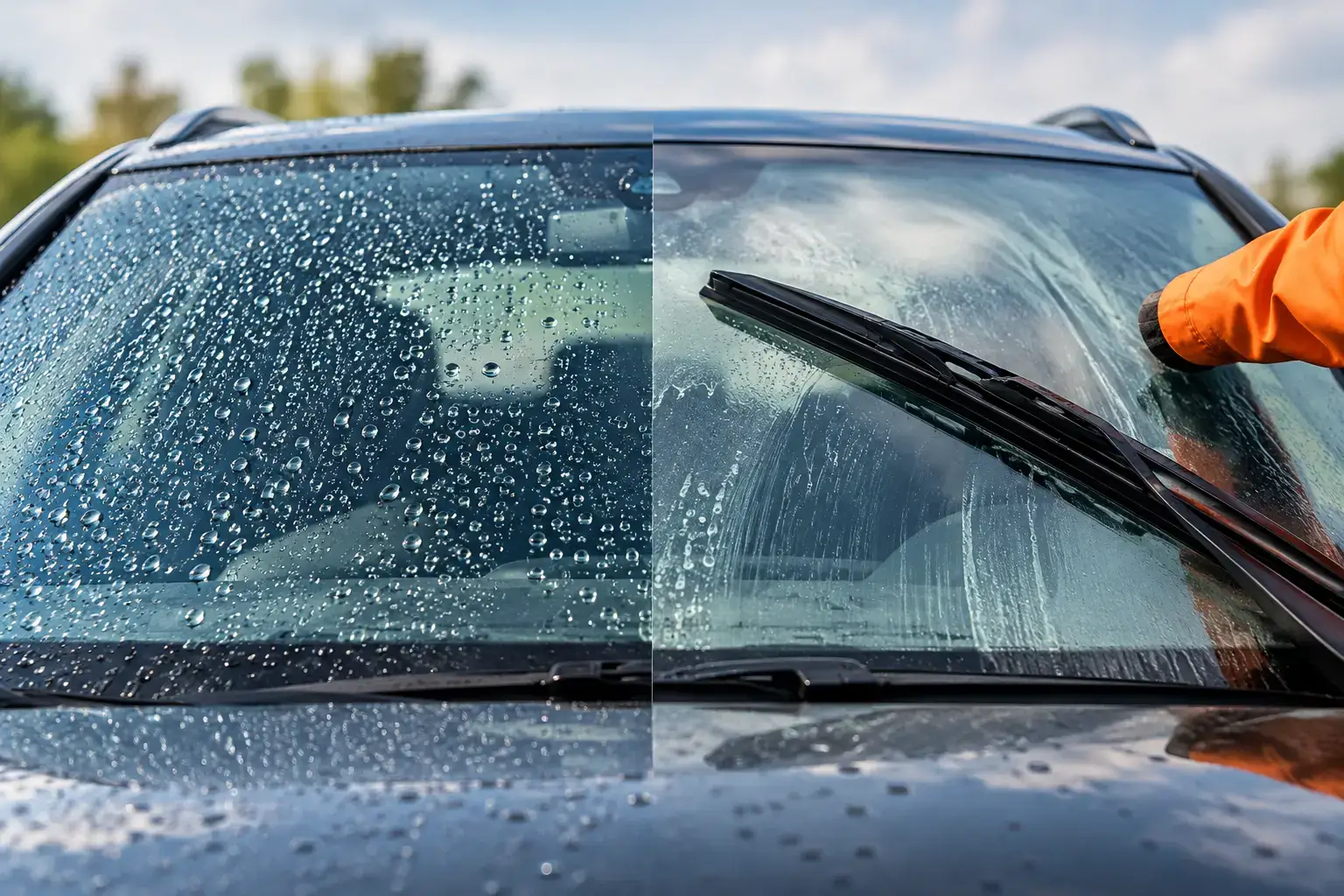
Rain repellent works differently. It is a protective treatment applied to clean glass that makes the windshield more water-resistant. Instead of spreading into a sheet, water beads up and rolls away more easily. At highway speeds, airflow can carry many of those beads off the windshield before the wipers need to make another pass.
That difference matters because rain repellent does not replace wipers. It helps them work with less effort. Your wipers still handle standing water, slush, road salt, bugs, and the fine spray that builds up behind trucks. The treatment reduces the amount of water clinging to the glass, while the blades clear what remains.
When Rain Repellent Makes the Biggest Difference
Rain repellent is especially helpful for drivers who spend time on I-70, I-270, Route 15, or other higher-speed roads around Frederick County. Once a vehicle reaches a steady speed, the water-beading effect becomes much more noticeable. The windshield can stay clearer between wiper passes, which can make a long rainy drive feel less demanding.
It also helps during lighter rain, when intermittent wiper settings can sometimes leave a hazy film behind. A treated windshield sheds droplets more readily, so you may not need to run the wipers as often. That can reduce distracting wiper chatter and make nighttime driving more comfortable when headlights reflect off wet pavement.
There is another benefit people often notice after a proper wash: easier cleaning. Dust, pollen, and everyday grime do not bond to protected glass as stubbornly as they do to neglected glass. That does not mean the windshield will stay spotless forever, especially during Maryland pollen season or winter road treatment season. It simply means regular maintenance is easier and visibility can stay better between washes.
Where Wipers Still Win
There are conditions where wipers do nearly all the work. In slow-moving traffic, you do not have enough airflow for water to roll away quickly. In a downpour, water can collect faster than any coating can shed it. Snow, slush, muddy spray, and windshield washer fluid also require functioning blades.
This is why drivers should not treat a water-repellent application as permission to put off replacing worn wipers. If blades leave streaks, skip across the glass, squeal, or leave a persistent wet line in your field of view, they are no longer doing their job. A coating can make the problem less obvious at speed, but it cannot fix split rubber or a bent wiper arm.
For most vehicles, wiper blades should be inspected every few months and replaced when performance drops. Many drivers replace them about once or twice a year, depending on parking conditions, weather exposure, and how often the vehicle is driven. Summer heat, winter freezing, and direct sunlight can all age rubber faster.
Why Windshield Prep Matters
A rain repellent treatment only performs as well as the glass underneath it. If the windshield has a layer of oily residue, old washer-fluid buildup, tree sap, or road film, the treatment may bead unevenly or wear away sooner. That can lead to patchy visibility rather than the clean, consistent effect drivers expect.
Professional wash chemistry helps remove the film that regular rain cannot wash away. A thorough exterior wash also clears grime from the wiper area, mirrors, and side windows, which matters when rain reduces your visibility from every angle. At Fusion Carwash, water-repellent treatment can be a smart add-on for drivers who want more protection without adding another chore to their weekend.
The goal is not to make glass look shiny for a day. It is to create a cleaner surface that lets you see the road, lane markings, pedestrians, and brake lights more quickly when weather changes.
How to Get Better Results From Both
The most effective routine is simple: keep the windshield clean, maintain the wiper blades, and refresh rain protection as needed. If you apply a repellent product at home, follow its directions closely. Some formulas need the glass to be completely dry, while others need time to cure before driving in rain.
Avoid applying a glass treatment over dirty glass or using household cleaners that leave behind waxy residue. The coating may not bond properly, and your wipers may drag or smear afterward. If wipers begin skipping after an application, clean both the windshield and the rubber blade edge. The issue is often buildup, not necessarily a bad treatment.
Your washer fluid matters, too. Use a quality fluid suited to the season, especially before freezing temperatures arrive. Plain water can freeze, does not clean as effectively, and may leave contaminants behind. In winter, a proper washer fluid helps remove salt spray that can quickly obscure a windshield even when it is not raining.
Choosing What You Need for Your Driving Routine
If you mainly drive short distances around town, reliable wipers and a clean windshield should be your first priority. Rain repellent is still useful, but you may notice its high-speed benefits less often. If you commute on highways, travel frequently, or drive before sunrise and after dark, a water-repellent treatment can be a worthwhile extra layer of confidence.
Families may appreciate it for another reason: rain affects more than the front windshield. Cleaner side windows and mirrors make lane changes, school drop-offs, and busy parking lots easier to manage. Drivers with older vehicles can also benefit because improved water beading may help compensate for glass that has become harder to keep clear, although deep scratches and chips should be addressed separately.
There is a budget consideration as well. New wiper blades are a necessary maintenance expense, while rain repellent is an added protection service. If you must choose, replace failing blades first. Once your wipers are working correctly, rain repellent is a practical upgrade that helps protect the visibility you already depend on.
A Clearer View Starts Before the Storm
The best time to think about wet-weather visibility is when the sky is clear. Check your wipers before the next heavy rain, keep washer fluid topped off, and do not let road film build up on the glass. With clean windows, healthy blades, and water-repellent protection working together, you can spend less time fighting the weather and more time focused on the road ahead.