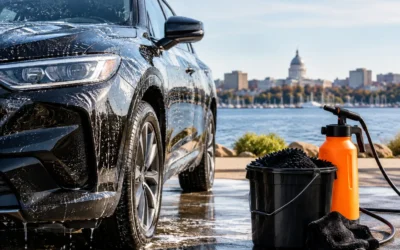
Road salt does its job when Frederick roads turn icy, but it does not stay on the road. It collects beneath your vehicle in places you rarely see: suspension components, brake lines, frame areas, wheel wells, exhaust hardware, and protective panels. An underbody wash after winter salt is one of the simplest ways to remove that residue before it has time to cause trouble.
A clean exterior can make a car look ready for spring, while the underside is still holding onto weeks of salty slush and road brine. That is why a post-winter wash should do more than brighten the paint. It should reach the areas where winter grime does the most damage.
Why Winter Salt Is Hard on Your Vehicle
Maryland winter roads are often treated with rock salt, liquid brine, or a combination of both. These materials help create safer driving conditions, especially for commuters, families, and anyone traveling between Frederick, Urbana, Middletown, Linganore, and Adamstown. The trade-off is that salt accelerates corrosion when moisture is present.
Metal parts underneath a vehicle are built to handle harsh conditions, and modern vehicles have better coatings and corrosion protection than older models. Still, those protections are not invincible. Saltwater spray can work into seams, brackets, fasteners, and small chips in protective coatings. The longer it sits, the greater the chance of rust forming or existing rust getting worse.
You may not see the effects right away. Corrosion often begins quietly, then becomes noticeable later as rusty hardware, flaky components, noisy brakes, damaged lines, or a lower resale value. Regular washing will not reverse rust that has already developed, but it can remove the material that contributes to it.
When Should You Get an Underbody Wash After Winter Salt?
The best time is soon after the last major salt exposure, not only when spring weather finally arrives. If roads were recently treated and your vehicle drove through slush, puddles, or damp roads, washing within a few days is a smart move.
For most drivers, an underbody wash is especially worthwhile after a snowstorm, freezing rain event, or several days of salted-road commuting. If winter weather continues, do not wait for one final wash in March. Periodic washes throughout the season can keep buildup from becoming a long-term problem.
There is no single perfect schedule because it depends on how much you drive and where you drive. A vehicle that sits in a garage most of the week will have less exposure than a daily commuter traveling on treated roads every morning. Families making frequent school runs, workers with longer commutes, and drivers who use rural or hilly routes may benefit from more frequent underbody cleaning.
A good rule is to wash after significant road treatment and again once the winter season begins to ease. If you are enrolled in an unlimited monthly wash club, it is easier to fit those extra washes into your routine without debating whether each visit is worth it.
What an Underbody Wash Actually Cleans
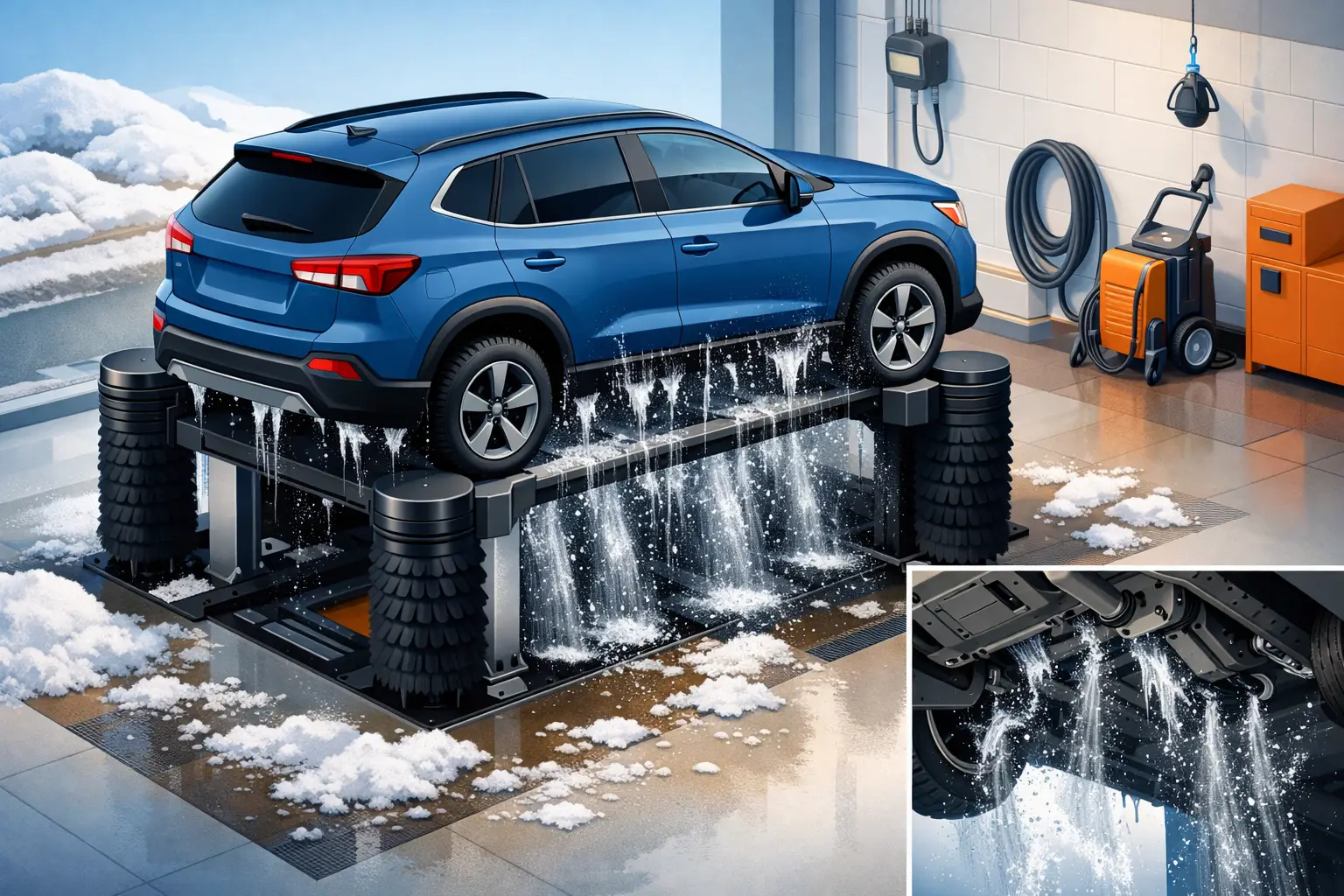
An underbody wash uses targeted water pressure to rinse the lower areas of the vehicle that a standard exterior wash may not reach as thoroughly. It is designed to flush away loose salt, sand, mud, and winter road film from beneath the car and around the wheel area.
It is not the same as a mechanical repair inspection, and it cannot reach every enclosed cavity in every vehicle. A quality underbody wash should be viewed as preventive routine care, much like washing away bird droppings or tree sap before they have time to affect the finish.
The most useful benefit is removal. Salt needs moisture to keep doing damage, so clearing away the salty residue and rinsing the underside helps reduce what is left behind after winter driving. Pairing it with a complete exterior wash also helps remove grime from lower door panels, rocker panels, bumpers, and wheel wells, where road spray tends to collect.
Don’t Wait Until Your Car Looks Dirty
One reason winter salt is easy to ignore is that it can be nearly invisible. After a dry day, your vehicle may look reasonably clean from the driver’s seat. Underneath, however, dried salt residue can still be present.
This matters most after temperatures rise above freezing. Melting snow, rain, and humid conditions add moisture back into the mix. That is when lingering salt can become more active on metal surfaces.
A wash is particularly timely when you notice a white or gray film along the lower body panels, packed debris behind the wheels, or dried streaks around the wheel wells. Those signs do not tell the whole story, but they are a clear reminder that road grime has been traveling with you.
Underbody Cleaning Is Part of Spring Vehicle Care
Spring cleaning for your vehicle should focus on protection as much as appearance. After months of cold weather, sand, slush, and salt, an underbody rinse gives your vehicle a cleaner starting point for the warmer months.
It also makes sense to clean the wheels, tires, and lower body carefully. Brake dust and road film can build up around wheels, while mud and grit may collect in wheel wells. A full wash leaves the vehicle looking better, but it also helps you spot anything unusual, such as a loose splash guard, damaged trim, or an area that may deserve a closer look from a service professional.
For drivers who care about paint protection, spring is also a good time to refresh the exterior with a wax, sealant, or ceramic protection service. These treatments protect painted surfaces from everyday contaminants and help maintain shine. They do not replace an underbody wash, since the underside of the vehicle needs its own attention, but together they create a more complete seasonal reset.
Is an Underbody Wash Safe for Every Vehicle?
In general, underbody wash systems are intended for regular passenger vehicles, trucks, and SUVs. Still, the right approach can depend on your vehicle’s condition and modifications. If you have a classic car with existing rust, exposed wiring, aftermarket accessories, a lowered suspension, or known undercarriage damage, ask for guidance before using any high-pressure wash service.
Newer vehicles can benefit too. Factory undercoating and protective shields are helpful, but they do not stop road spray from reaching every exposed surface. Cleaning off salt is still a practical habit, especially in an area where winter conditions can change quickly.
If temperatures are below freezing, be mindful of where you park afterward. A wash can leave water around door seals, handles, and other areas that may freeze. Choosing a milder day or driving for a few minutes after the wash can help reduce that concern.
Make It Easy to Stay Ahead of Salt
The most effective car-care routines are the ones that fit real life. You do not need to crawl under your vehicle with a hose after every snowy commute. A professional wash with underbody cleaning provides a convenient way to handle the mess while you focus on the rest of your day.
At Fusion Carwash, customers can choose the level of care that works for their schedule, whether they need a quick express wash or want full-service attention inside and out. For frequent winter drivers, a monthly wash plan can make it easier to stop in after storms and keep salt from building up between visits.
Your vehicle carried you through the winter. Give the hidden parts the same attention you give the shine on top, and let a timely rinse help it head into spring cleaner, better protected, and ready for the miles ahead.