A quick trip to the dog park can leave your interior looking like your passenger shed a second coat on the way home. If you need to remove pet hair from your car, the trick is not simply vacuuming harder. Hair works its way into carpet fibers, seat seams, floor mats, and cargo liners, so the right method depends on where it has collected.
For Frederick-area families, commuters, and pet owners, a clean vehicle should not require giving up an entire Saturday. Start with a few simple tools, work from high surfaces down to the floors, and know when a deeper interior service is worth it.
Why Pet Hair Is So Hard to Remove From a Car
Pet hair is light, static-prone, and surprisingly good at anchoring itself in automotive carpet. Short, stiff hair can weave into seat fabric and mats. Fine, soft hair may float around the cabin, clinging to plastic trim, headliners, and every surface your dog brushed against.
A basic vacuum can pick up loose hair, but it may glide over embedded strands without lifting them. That is why the most effective approach combines agitation with suction. First loosen the hair, then vacuum it away before it settles somewhere else.
Timing matters, too. Cleaning hair while it is dry is usually easier. Damp hair tends to mat into fabric, especially after a rainy Maryland walk, a wet dog ride, or a spill in the cargo area.
How to Remove Pet Hair From Car Seats and Carpet
Begin by taking out floor mats, cargo liners, pet blankets, and anything else that blocks access to the interior. Shake the mats outdoors first. This removes loose debris and keeps your vacuum from doing all the work.
Start With a Thorough Vacuum
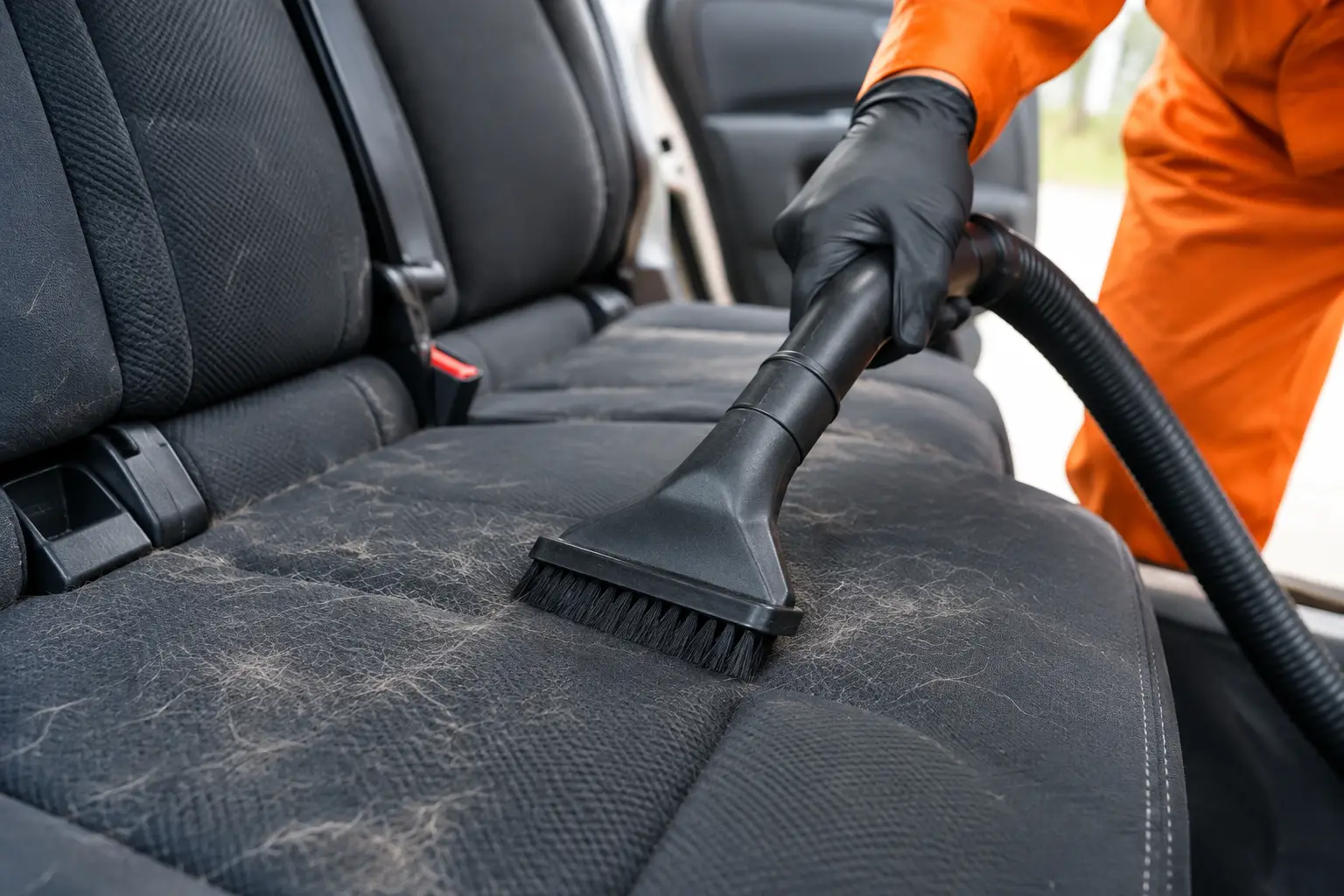
Use a vacuum with strong suction and a crevice attachment. Work slowly across the seats, moving in more than one direction instead of making a single pass. On cloth seats, pay close attention to seams, the space between the seatback and cushion, and the edges near seat belts.
For carpeting, vacuum in short overlapping strokes. Moving the nozzle forward and backward helps pull hair up from fibers. A brush attachment can help, but use light pressure so you do not grind dirt further into the carpet.
If you visit an express wash with free vacuum stations, take a few extra minutes before or after your wash. A clean exterior feels even better when the cabin is not full of fur and crumbs.
Use a Rubber Tool to Lift Embedded Hair
Rubber creates friction that gathers hair into visible clumps. A rubber pet-hair brush, rubber glove, or small rubber squeegee can be especially effective on fabric seats, carpet, and floor mats.
Put on a clean rubber glove and lightly drag your hand in one direction over the surface. You can dampen the glove very slightly, but it should not be wet. The hair will bunch together, making it much easier to vacuum or pick up. For flat carpeted areas, a rubber squeegee works well in the same way.
This method takes a little patience, but it is often the difference between a car that looks vacuumed and one that actually looks clean.
Try a Lint Roller for Finishing Touches
A lint roller is ideal for the final pass on seat cushions, door panels, and clothing before you get back behind the wheel. It is not the best tool for a carpet full of hair, since you will use sheet after sheet, but it works well on small areas and delicate fabrics.
Reusable sticky rollers can reduce waste, while a traditional disposable roller is convenient to keep in the glove box. Either way, save it for the details after vacuuming and rubber brushing have done the heavier work.
Use Fabric-Safe Tape in Tight Areas
Wide packing tape wrapped around your hand, sticky side out, can reach places a roller cannot. Press it gently around seat seams, console edges, and door-pocket areas. Replace the tape as it fills with hair.
Avoid aggressive tape on aging leather, cracked vinyl, or delicate upholstery. Test a small hidden spot first if you are unsure.
The Best Method Depends on Your Interior
Cloth interiors usually need the most effort because fibers trap hair. A vacuum followed by a rubber glove or brush is the reliable combination. If the seat fabric is heavily textured, work in sections rather than trying to tackle the whole seat at once.
Leather and vinyl are easier to manage, but hair can collect in stitching and along the seat tracks. Vacuum first, then use a soft microfiber towel or a lightly damp rubber glove to collect what remains. Do not use stiff brushes that can scratch the surface, and do not soak leather with water.
Rubber floor mats are the simplest. Remove them, shake them out, vacuum if needed, then wash and dry them before reinstalling. Carpeted mats deserve the same rubber-brush treatment as the vehicle floor. If they hold odor along with hair, a deeper cleaning may be needed rather than another quick vacuum.
The cargo area is often the toughest spot, particularly for SUVs used for crate transport, trail days, or weekly trips with a large dog. Remove the cargo cover and work around tie-down points, side pockets, and the gap behind the rear seats. A removable cargo liner or washable pet hammock can make future cleanup much faster.
Skip These Common Pet-Hair Mistakes
Do not rely on air alone. Blowing pet hair around the cabin may move it out of sight, but it often lands in vents, seat tracks, and other difficult places. Likewise, avoid spraying interior cleaner directly onto hair-covered carpet before removing the fur. Moisture can make the hair cling more tightly.
Dryer sheets are sometimes suggested because they can reduce static. They may help as a light finishing step on hard surfaces, but they are not a substitute for vacuuming and agitation. Use them cautiously and wipe away any residue afterward.
It is also wise to avoid metal brushes, harsh scraping tools, and household cleaners that are not meant for automotive interiors. A clean car is not worth scratched trim, faded upholstery, or a slippery product film on the seats.
When Professional Interior Care Makes Sense
At-home tools are great for routine cleanup, especially if your pet rides along every week. But a professional interior cleaning is often the better choice when hair is packed into carpets, mixed with mud and odor, or hiding beneath seats and in hard-to-reach crevices.
This is especially true before trading in a vehicle, taking a long road trip, or giving someone with allergies a ride. Steam detailing can help refresh high-touch interior surfaces and loosen grime, while trained detailers have the equipment and process to handle the areas most drivers would rather skip.
At Fusion Carwash, full-service options make it easier to pair a polished exterior with interior attention, so you can relax while the details are handled. The right service depends on how much hair, dirt, and daily use your vehicle has seen, but the goal is simple: leave with a cabin that feels cared for again.
Keep Pet Hair From Building Up Again
The easiest way to remove pet hair from a car is to keep it from becoming a thick layer in the first place. Brush your pet before longer rides when possible, and use a washable seat cover, hammock, or cargo liner in their usual spot. These barriers will not catch every strand, but they contain most of the mess and can be shaken out or washed separately.
Keep a small lint roller, microfiber towel, and reusable rubber brush in the car. A two-minute cleanup after a ride is far easier than tackling months of built-up fur. If you wash often, an unlimited monthly wash plan can also make it easier to maintain the outside of your vehicle while you stay on top of the interior between deeper cleanings.
Your pet does not have to give up their favorite seat. With a simple routine and the right tools, you can enjoy the ride together without letting every trip show up in the carpet.