That smell is usually not coming from the air. It is living in your vehicle’s carpet, seats, floor mats, headliner, vents, or a forgotten item under the seat. The most effective car odor removal methods do more than cover up the problem with a freshener. They find the source, remove the residue, and give the interior time to dry completely.
For drivers around Frederick, a car can pick up plenty of odor-causing material in a normal week: wet shoes after rain, takeout on the way home, coffee during a commute, kids’ snacks, sports gear, or a dog ride through town. The good news is that most odors can be handled. The key is matching the cleaning method to the cause.
Start With the Source, Not the Scent
A hanging air freshener can make a vehicle smell better for a day or two, but it cannot neutralize spilled milk in the carpet or mildew inside the air-conditioning system. Before using any cleaner, take five minutes to inspect the cabin closely.
Remove all trash, including receipts, cups, food wrappers, and anything stored in seat pockets or door compartments. Check beneath the front seats, around child safety seats, in the trunk, and under the cargo floor. A lost apple slice or a damp gym bag can create a surprisingly stubborn smell.
Then feel the carpet and mats. If an area is damp, the priority is drying it out. Moisture feeds mildew and can leave a musty odor even after the original spill is gone. Pull out removable floor mats, blot wet areas with clean towels, and leave doors or windows open in a safe, dry place whenever possible.
Car Odor Removal Methods by Type of Smell
Different odors need different treatment. Using the wrong product can waste time and, in some cases, set a stain or leave behind an overpowering fragrance.
Food, drink, and everyday spills
Fresh spills are the easiest to solve. Blot liquids promptly instead of rubbing them deeper into upholstery. For fabric seats and carpet, use a cleaner made for automotive interiors and follow the label directions. Work in small sections, then blot away moisture and residue with a clean microfiber towel.
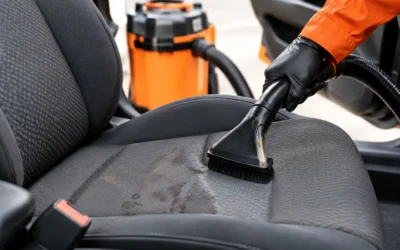
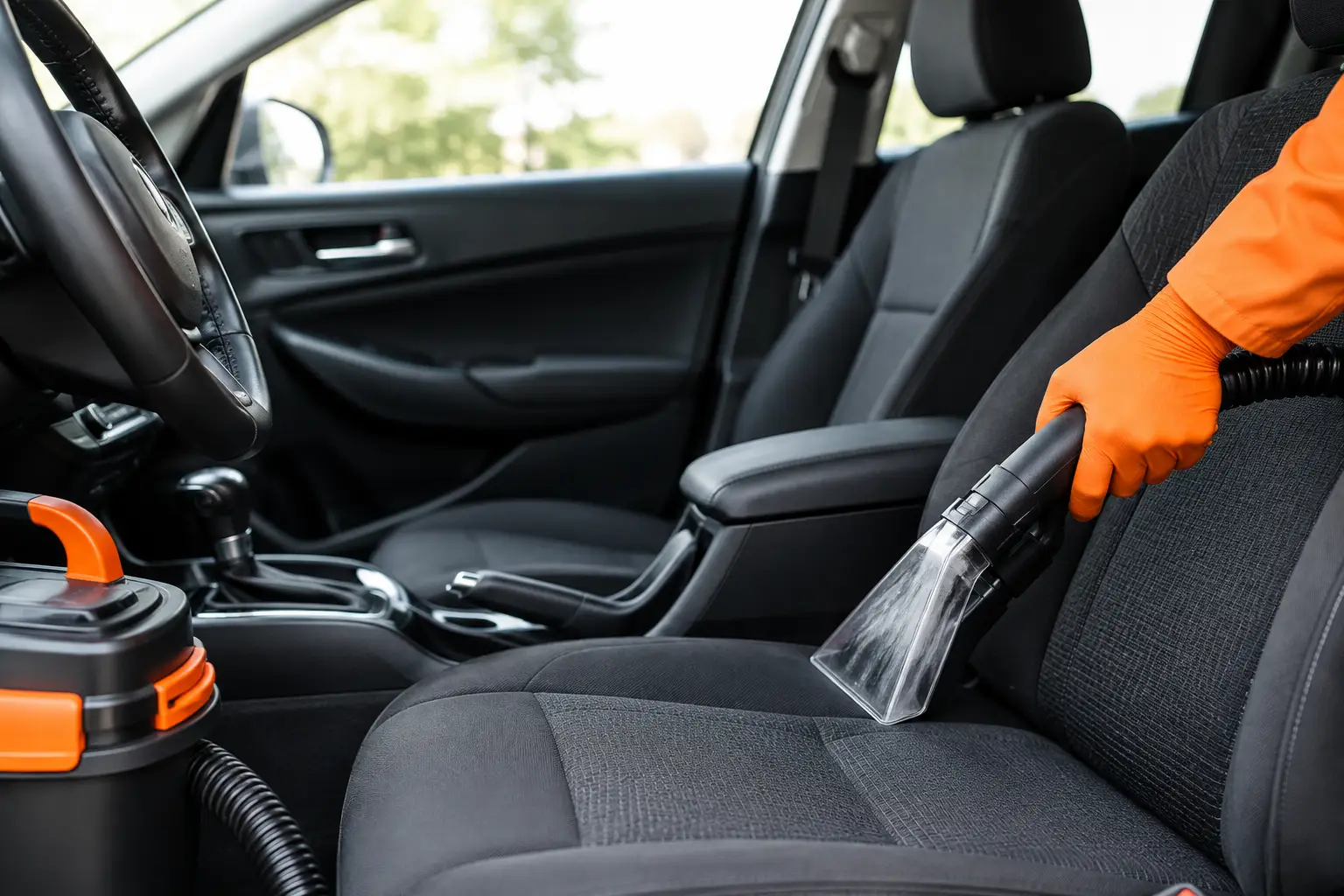
For old food or drink spills, cleaning the visible area may not be enough. Liquids can soak through carpet into the padding underneath, where they continue to smell. A deeper extraction process is often the better answer, especially for milk, sugary drinks, coffee with cream, or anything that sat in the vehicle for several warm days.
Baking soda can help with light, dry odors in carpet. Sprinkle a modest amount over the affected area, let it sit for several hours, then vacuum thoroughly. It is useful as a follow-up, not a replacement for removing the original residue.
Pet odors
Pet hair, wet fur, accidents, and muddy paws all create different challenges. Start by vacuuming seats, carpet, cracks, and cargo areas thoroughly. Hair holds odor, so take your time around seat seams and under the rear seats.
For urine or accident odors, an enzyme-based cleaner is usually the most effective option. Enzymes break down the organic material that causes the smell, while a standard fragrance cleaner may only disguise it. Test any product in an inconspicuous spot first, especially on leather, suede-like materials, or delicate trim.
Avoid soaking the area. Too much liquid can push the problem deeper and create a new moisture issue. Apply the cleaner as directed, gently blot, and allow the material to dry fully before closing up the vehicle.
Smoke odors
Smoke is one of the toughest interior odors because residue settles on nearly every surface. It can cling to glass, plastic, fabric, leather, headliners, and the cabin air filter. Simply shampooing the carpet rarely solves it.
A proper smoke-odor treatment starts with a thorough interior cleaning. Wipe hard surfaces, clean the inside of the windows, vacuum fabric, and shampoo or extract seats and carpet as needed. The headliner deserves special care. It should be cleaned lightly because excessive moisture or aggressive scrubbing can loosen the adhesive behind it.
Replacing the cabin air filter is also a smart step, particularly if the odor becomes stronger when the fan or air conditioning is running. If smoke odor remains after detailed cleaning, professional odor treatment may be worthwhile. Ozone and other advanced treatments can be effective when used correctly, but they should be handled by trained professionals and never used while people or pets are in the vehicle.
Musty or mildew smells
A musty smell often points to trapped moisture. Look for wet carpet, a leaking door seal, a clogged sunroof drain, damp trunk lining, or a spill that never dried. If the vehicle smells worse when the climate control starts, the evaporator area or cabin air filter may be involved.
Begin by drying the interior and addressing the source of water. Cleaning without fixing a leak only leads to the same odor returning after the next storm. Replace a dirty cabin air filter and run the fan with the windows open after cleaning to help circulate fresh air.
For mild vent odors, a climate-system cleaner may help. Persistent mildew, visible mold, or recurring dampness calls for professional inspection. That is not a situation to cover with fragrance. It needs to be corrected at the source.
Vomit and other biological odors
These odors require quick action and patience. Remove solid material carefully, clean the affected surface, and use an enzyme cleaner designed for organic messes. Fabric, carpet padding, and seat foam can hold odor below the surface, so repeated treatment or extraction may be necessary.
If the mess reached an area that cannot be easily accessed, such as beneath carpeting or inside seat cushions, professional detailing can save a lot of frustration. The goal is not just to make the cabin look clean. It is to remove what is causing the odor to keep returning.
Clean the Places Most Drivers Miss
A vehicle may still smell off after a good vacuum because odor-causing residue often sits in overlooked areas. Seat belts, cup holders, door pockets, the steering wheel, gear selector, and the inside of windows all collect oils and grime. Wipe these surfaces with an interior-safe cleaner and a microfiber towel.
Do not forget floor mats. Rubber mats can be washed, rinsed, and dried separately. Carpet mats should be vacuumed, treated for stains if needed, and allowed to dry completely before going back in the vehicle. Reinstalling damp mats is an easy way to bring a musty smell right back.
The trunk deserves attention too. Groceries, sports equipment, strollers, wet umbrellas, and roadside supplies can leave behind odors that drift through the cabin. Empty it, vacuum it, and inspect the spare-tire compartment for signs of moisture.
What to Avoid When Removing Car Odors
Strong fragrance is not the same as a clean interior. Too much air freshener can create a scent that is just as unpleasant as the original problem, especially in a small cabin. Use fragrance only after the source has been removed, and choose a light scent if you use one at all.
Be careful with household cleaners. Bleach, harsh degreasers, and heavily perfumed products can damage leather, discolor fabric, or leave residues on interior surfaces. Steam can be helpful for certain hard surfaces and detailing jobs, but it is not right for every material or moisture problem. Leather, electronics, headliners, and delicate trim require a controlled approach.
Also, resist the urge to close up a freshly cleaned vehicle too soon. Drying matters. If carpet or upholstery is still damp, leave doors open in a secure location or use airflow to speed up the process. A clean interior should smell neutral, not wet.
When Professional Detailing Makes Sense
DIY cleaning works well for small spills, light pet odors, and routine upkeep. Professional service is often the better value when the odor is persistent, the source is unknown, or the contamination has reached carpet padding, seat foam, or the ventilation system.
A full interior detail can combine vacuuming, targeted stain treatment, extraction, surface cleaning, and odor-focused care in a way that is difficult to duplicate with a few products at home. At Fusion Carwash, steam detailing can be a helpful option for drivers who want the interior handled with care while they get time back in their day.
If an odor returns shortly after cleaning, do not keep adding fragrance. Treat that return as a clue. There may be hidden moisture, residue below the carpet, a dirty cabin filter, or a leak that needs attention.
A clean car should feel comfortable the moment you open the door. Keep up with small spills, remove damp items quickly, and give stubborn smells the right level of care. That way, every drive around Frederick starts with a cabin that looks cared for and smells genuinely fresh.