A freshly washed vehicle can look great for about five minutes, then sunlight hits a missed drip on the mirror or door handle and leaves behind a chalky circle. To prevent water spots after washing, the goal is not just getting the dirt off. It is controlling what happens to the water before it dries on your paint, glass, trim, and wheels.
For drivers in Frederick and nearby communities, that matters year-round. Summer heat speeds up evaporation, spring pollen sticks to damp surfaces, and winter road grime can make a quick rinse feel necessary. A few better wash and drying habits can keep a clean car looking clean longer.
Why water spots show up after a wash
Most water spots are mineral deposits left behind after water evaporates. Tap water naturally contains minerals such as calcium and magnesium. When a droplet dries, the water disappears but those minerals remain. On dark paint and glass, they can be especially noticeable.
Not every spot is the same. A light, fresh spot may wipe away easily with a clean microfiber towel and detail spray. A spot that has been baked into the surface by hot sun can be harder to remove. In more severe cases, mineral deposits can etch into clear coat or glass, meaning regular washing alone may not fully correct the damage.
Heat is the biggest reason a normal wash turns into a spotty finish. Water dries fast on a hot hood, roof, windshield, and wheels. Wind can speed the process up too. That is why a vehicle washed in direct afternoon sun often needs more than a final rinse to look polished.
Prevent water spots after washing with better timing
The simplest improvement is choosing the right time and place to wash. Whenever possible, wash in the shade, inside a covered bay, or during cooler morning or evening hours. You do not need perfect weather, but you do want enough time to rinse and dry each section before water evaporates.
If shade is not available, avoid trying to wash the whole vehicle at once. Work in smaller sections. Rinse one area, wash it, rinse thoroughly, and dry it before moving to the next. Start high and work down, since water naturally runs from the roof and glass onto the doors and lower panels.
A hot vehicle needs a little extra care. If the paint feels warm to the touch, give it a cool-water rinse first. This lowers the panel temperature and removes loose dust before soap goes on. Do not let soap sit and dry, especially on the hood, roof, or black trim.
The final rinse makes a real difference
A thorough rinse is one of the most overlooked steps in car care. Soap residue can hold minerals and leave a hazy finish when it dries. Make sure water runs cleanly off every panel, including behind the mirrors, around the fuel door, under the spoiler, and along the window trim.
At home, a filtered or deionized final rinse can reduce mineral residue, but it is not required for a better result. The bigger priority is getting standing water off the vehicle quickly. Professional wash systems are designed to use controlled wash chemistry and rinse processes that help water sheet away rather than cling to the surface.
If you use a self-service wash bay, spend a few extra moments on the final rinse. It is easy to miss wheel barrels, the lower rocker panels, and the back of an SUV or truck. Those areas can drip long after you think the vehicle is dry.
Do not skip the hidden drip zones
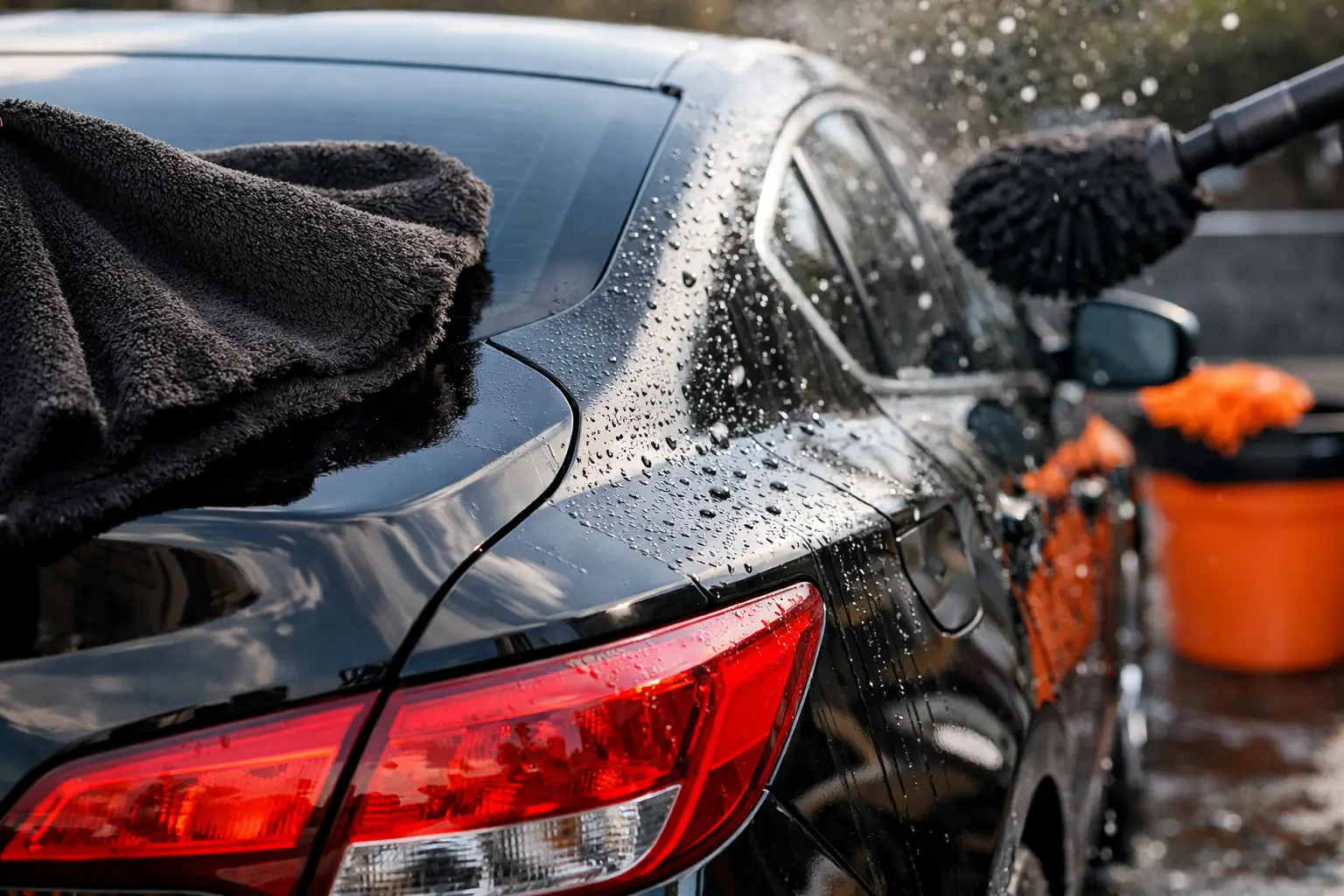
Water loves to hide in places that do not get much attention during drying. Mirrors, door handles, grilles, badges, roof rails, hatch seams, taillights, and wheel lug areas are common culprits. A clean vehicle can develop new spots as water slowly runs out of these spaces after you pull away.
After the main dry, open and close the doors once, gently tap the mirrors if needed, and make a quick pass around the vehicle with a dry towel. On a hatchback, SUV, or minivan, check the rear liftgate and license plate area. These small details make the finish look noticeably more complete.
Dry the vehicle the right way
Drying is where the difference between a basic wash and a polished result becomes obvious. Use clean, high-quality microfiber drying towels rather than old bath towels, paper towels, or anything that feels rough. Microfiber is absorbent and soft, helping pull water away without dragging debris across the paint.
Blotting or lightly gliding the towel over the surface is better than scrubbing. Begin with the roof, windows, hood, and trunk, then move down the sides. Save the lower panels and wheels for last so road residue does not end up on your paint towel.
Use more than one towel if necessary. Once a towel is saturated, it stops absorbing efficiently and can leave streaks. Keep a separate microfiber towel for glass, too. This helps avoid transferring tire dressing or wax residue onto windows.
Air blowers can help clear water from mirrors, emblems, grilles, and trim before towel drying. They are useful, but they are not always enough by themselves. Air can push water out of crevices, while a microfiber towel finishes the job on the painted surfaces.
Protection helps water leave the paint faster
A protected surface is easier to dry and less likely to hold water droplets in place. Wax, sealants, and ceramic protection create a slicker barrier over the paint. Water tends to bead up or sheet off, making it easier to remove before spots develop.
There is a trade-off: water beading looks great, but tightly beaded water can still dry into spots if it is left sitting in the sun. Protection is not permission to skip drying. It gives you more time and makes cleanup easier, especially after rain or a quick rinse.
For vehicles that see daily commuting, kids’ activities, construction dust, tree pollen, and Maryland weather, consistent protection can also reduce the amount of grime that bonds to the exterior. A well-maintained finish is easier to wash, easier to dry, and more satisfying to drive.
At Fusion Carwash, higher-level wash options can add protective services that support that clean, glossy finish without adding another project to your weekend. The best choice depends on how often you wash, where you park, and how long you want the protection to last.
Avoid the habits that create spots and streaks
A few common shortcuts lead directly to water spots. Letting the car air dry is the most obvious one, but using a dirty towel can be just as frustrating. It may leave streaks, redistribute minerals, or add fine scratches to the finish.
Be careful with household glass cleaners and harsh chemicals, too. They may temporarily improve the appearance of glass but can strip protection or leave residue on surrounding trim. Use products intended for automotive surfaces, and follow the directions rather than applying more product than needed.
Do not chase every drip while the vehicle is still soaking wet. First remove the bulk of the water from the roof, hood, glass, and large panels. Then make a second pass for mirrors, handles, seams, and trim. That order is faster and prevents the water from higher areas from undoing your work.
What to do if spots are already there
Fresh water spots are usually manageable. Rewash the affected area in the shade, rinse thoroughly, and dry immediately with a clean microfiber towel. A dedicated water spot remover may help on stubborn mineral deposits, but test it in a small inconspicuous area first and do not use it on hot paint.
If the spots do not improve after a careful wash, they may have etched into the clear coat or glass. Aggressive scrubbing is not the answer. It can create swirl marks or damage delicate trim. A professional assessment is a smarter next step when spots have been sitting through multiple hot days.
The most reliable routine is simple: wash before grime builds up, avoid direct heat when you can, rinse completely, and dry with clean microfiber towels while the vehicle is still wet. Give the roof, mirrors, glass, and hidden drip zones an extra minute. That small bit of attention is what turns a quick wash into the kind of clean finish you notice every time you walk back to your car.