Frederick roads can leave more behind than a little dust. Pollen, brake dust, road film, winter salt, and grit collect quickly, especially on daily drivers. So, can car washes scratch paint? They can, but a properly maintained professional wash is usually far safer for your finish than letting abrasive grime sit on the vehicle or wiping it away with the wrong materials.
The real answer comes down to the wash process, the condition of the equipment, and the type of dirt already on your car. Not every wash is built or maintained to the same standard. Knowing what causes wash marks helps you choose a service that keeps your vehicle clean, protected, and looking its best.
Can Car Washes Scratch Paint?
A car wash does not automatically scratch paint. The concern is friction: tiny particles of dirt and sand can act like abrasives when they are dragged across the surface. If a vehicle enters a wash heavily soiled and that contamination is not loosened before contact, it can leave behind fine marks.
Those marks are often called swirl marks, though they may look more like faint cobwebs in direct sunlight. On darker vehicles, they are especially easy to notice. They usually affect the clear coat, the transparent protective layer over your vehicle’s color, rather than cutting deeply into the paint itself.
Modern professional car washes reduce this risk by using pre-soak chemistry, controlled water pressure, clean wash media, and consistent equipment maintenance. The goal is simple: lift and rinse away grit before anything touches the finish. That is a very different experience from rubbing a dusty car with a dry towel in the driveway.
What Actually Causes Wash Marks
The biggest risk is not water. It is trapped contamination. A grain of sand on a wash mitt, brush, towel, or drying cloth can create a fine scratch as it moves over the clear coat.
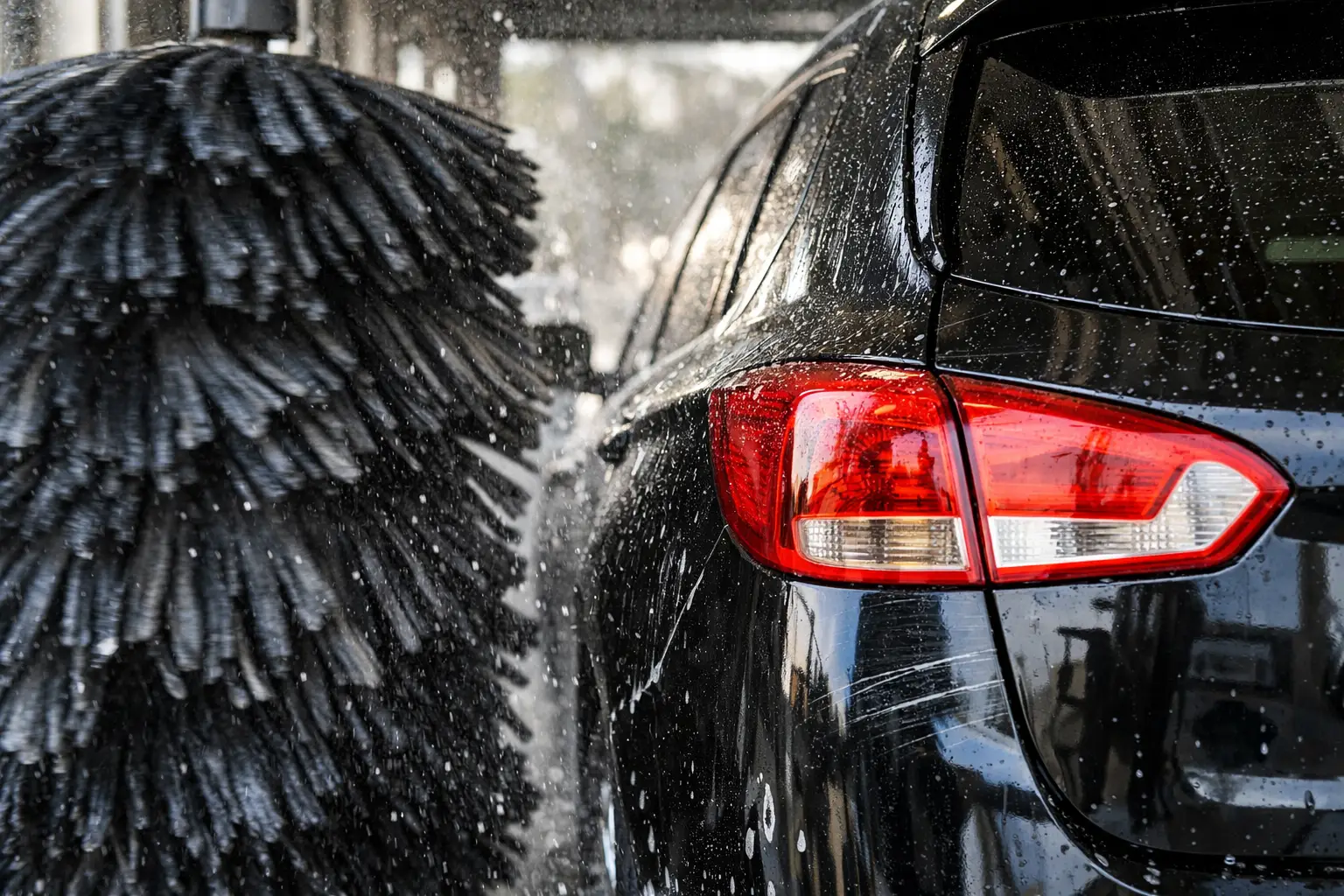
Tunnel washes can cause issues when brushes or cloth materials are worn, dirty, or poorly maintained. A wash that skips a thorough pre-rinse may also leave more debris on the vehicle before the cleaning stage begins. High-volume equipment needs routine attention, and professional operators should treat maintenance as part of the wash, not an afterthought.
Drying is another overlooked part of the process. Even a careful wash can leave marks if a dirty towel is used to finish the vehicle. Quality microfiber towels, clean drying equipment, and proper handling matter because the surface is most vulnerable when someone is physically touching it.
There is also the condition of the paint to consider. Older finishes, neglected clear coats, and vehicles already covered in swirls may show imperfections more clearly after they are cleaned. The wash did not necessarily create every mark you see. Sometimes it simply removes the dirt that was hiding them.
Automatic, Touchless, and Hand Washes: The Trade-Offs
No wash method is completely risk-free, and each option has a practical trade-off.
A touchless wash uses water pressure and cleaning solutions with little or no physical contact. It can be a good option for drivers focused on minimizing friction. However, because it relies less on contact, it may not remove stubborn road film, bugs, or heavy buildup as thoroughly as a quality soft-touch wash.
A well-maintained soft-touch automatic wash uses gentle cloth materials to provide the contact needed for a more complete clean. When the vehicle is properly pre-soaked and rinsed first, this approach offers a strong balance of cleanliness, convenience, and paint-care confidence for most daily drivers.
Hand washing can produce excellent results, but only when it is done correctly. A rushed hand wash with dirty buckets, reused towels, or rough sponges can scratch paint just as easily as poorly maintained automated equipment. The label matters less than the process.
For families, commuters, and busy professionals, the best choice is often a trusted wash that follows consistent steps every visit. You should not have to spend your Saturday managing buckets and hoses to keep your vehicle presentable.
How Professional Washes Help Protect Your Finish
A clean vehicle is easier to protect. Dirt, bug residue, bird droppings, tree sap, and road salt can all cling to the finish and become harder to remove over time. Some contaminants can even etch or stain the clear coat if they remain in place too long.
Regular washing removes that buildup before it has the chance to become a bigger problem. Protection services such as wax, sealants, ceramic protection, and water-repellent treatments add another layer of support. They do not make a car invincible, but they can help water bead, make dirt easier to release, and keep the finish looking glossier between washes.
That protection is particularly useful through Maryland’s changing seasons. Spring pollen, humid summer storms, fall leaves, and winter road treatment all ask something different from your vehicle’s exterior. A consistent wash routine gives you a better chance of staying ahead of the mess rather than trying to correct it after months of buildup.
How to Choose a Car Wash That Treats Paint Well
Look for a wash that puts the cleaning steps in the right order. Your vehicle should receive a meaningful pre-soak and rinse before any contact cleaning begins. This is where much of the loose grit is removed.
Pay attention to the overall condition of the location as well. Clean equipment, organized lanes, attentive staff, and a maintained property are good signs that the operation takes care of the details customers cannot always see. If brushes look worn or wash areas appear neglected, it is reasonable to choose another option.
Package options can make a difference, too. A basic wash may be ideal for a quick cleanup, while a higher-tier service with added protection can make sense for a newer vehicle, a dark-colored vehicle, or a car that spends long days outside. The right choice depends on how you drive, where you park, and how much protection you want between visits.
At Fusion Carwash, the goal is to give Frederick-area drivers practical choices: express convenience when time is tight, plus full-service care when you want the details handled for you. Quality and service should work together, whether you are heading to work, picking up the kids, or getting ready for the weekend.
Simple Habits That Reduce Scratch Risk Between Washes
Do not wipe dust, pollen, or mud from a dry vehicle. It is tempting to brush off a dirty spot with a sleeve, paper towel, or old rag, but that is one of the fastest ways to create fine scratches. Let water and proper wash products loosen the debris first.
If bird droppings, sap, or bug residue land on the paint, remove them as soon as you reasonably can. Use a clean, soft microfiber towel with a suitable spray or water, and blot gently rather than scrubbing. The longer those materials sit, the more difficult they become to remove safely.
Avoid using household towels, kitchen sponges, or gritty brushes on your vehicle. These materials can hold debris and are not designed for automotive clear coat. Keep dedicated microfiber towels for your car, wash them separately from lint-heavy laundry, and retire them when they become rough or heavily stained.
Finally, wash often enough for your real driving conditions. A garage-kept weekend car may need less frequent attention than a commuter traveling through construction zones, parking under trees, or facing winter road salt. For frequent drivers, an unlimited monthly wash plan can make regular care easier to keep up with.
When a Scratch Needs More Than a Wash
If you can catch a mark with your fingernail, it may be deeper than a surface-level swirl and could require professional correction or touch-up. Fine clear-coat haze, on the other hand, can often be improved with paint polishing by a qualified detailer.
Do not try to aggressively polish every imperfection at home. Polishing removes a very small amount of clear coat to level the surface, and repeated or improper use can do more harm than good. Start with regular, careful washing and protection, then seek professional advice for damage that is clearly visible or deep.
Your car does not need perfection to look well cared for. It needs a consistent routine, clean materials, and a wash process that respects the finish. Give the paint the same attention you give the rest of the vehicle, and that fresh, protected look will be easier to maintain mile after mile.